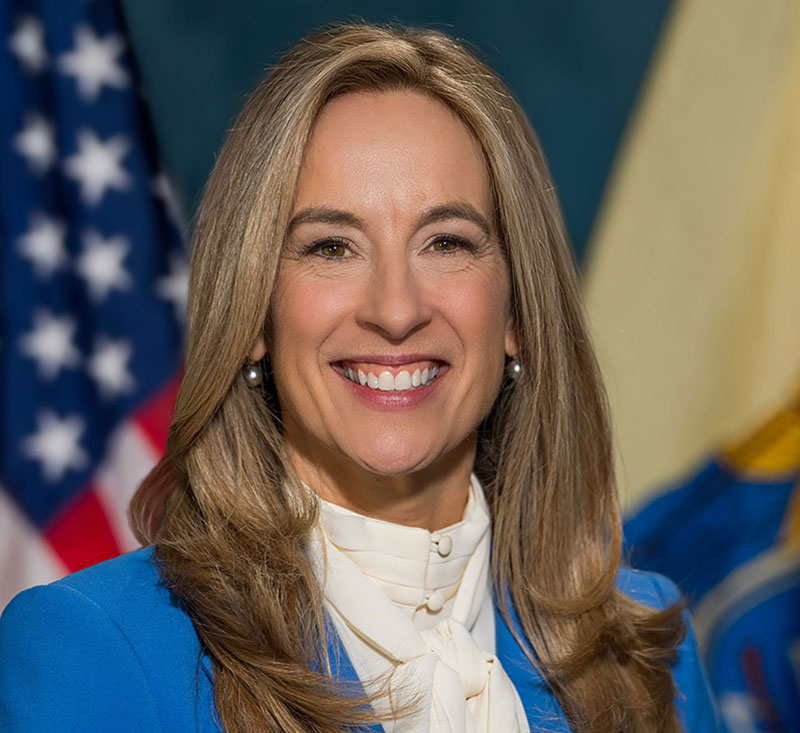


Gov. Sherrill Signs Executive Order To Raise NJ’s Third Grade Literacy Rate Above Current 48%
November 23, 2026JerseyCAN’s Paula White Responds to Gov’s Literacy Orders
This is a press release from JerseyCAN.
Governor Mikie Sherrill signed a series of Education-Related Executive Orders at an event at Arthur Judd Elementary School in North Brunswick Township. The orders include:
a.) Development of a strategic plan focused on expanding evidence-based reading instruction, strengthening reading proficiency by the third grade, and narrowing achievement gaps;
b.) Requiring school districts to choose literacy screeners (required by P.L. 2024, c.52) from a list developed by the New Jersey Department of Education;
c.) Support and implementation for new educator training programs that meet evidence-based reading instruction standards, high-quality training programs for existing educators, and literacy coaching programs to support districts and educators;
d.) Adoption of high-quality reading instruction materials for school districts;
e.) Development of financial feasibility strategies to create Intensive Literacy Summer Camps.
The following is a statement from Paula White, Executive Director of JerseyCAN, who attended the North Brunswick event today:
“Learning to read is the foundation for everything a child will do in school and in life. Yet this year’s state assessments show that more than half of New Jersey’s third graders are not reading on grade level, and we know that students who are not reading proficiently by the end of third grade are far more likely to leave school without a diploma or clear path forward. With these executive orders, Governor Sherrill is making clear that every child in New Jersey, in every zip code, deserves to leave third grade as a confident, capable reader. That is the right goal, and today the Governor put a real plan behind it.
“Since I joined the JerseyCAN community as Executive Director four years ago, we have focused like a laser on building and maintaining an honest and direct conversation about literacy throughout New Jersey.
“In open forums around the state, through the release of our policy reports, and by leveraging our convening power, we have maintained a consistent voice through the years to ensure that the state, and specifically elected officials in New Jersey, are not only aware of the facts behind the literacy crisis plaguing our state, but also aware of the evidence-based solutions we have developed and showcased that could positively and immediately impact our classrooms.
“For years, the JerseyCAN community of parents, educators, and advocates has pushed for New Jersey to align how we teach reading with what the research tells us works. Today’s orders reflect that work. A statewide strategic plan grounded in evidence-based reading instruction gives districts a clear direction, sets a shared goal of reading proficiency by third grade, and commits the state to closing achievement gaps that have held too many of our students back for far too long.
“In 2024, with unrelenting advocacy from JerseyCAN, the state made a commitment to screen young students for reading difficulties early, before they fall behind, but, as we warned, there needed to be a plan to ensure this law was implemented. Today, thanks to Governor Sherrill, the state is publishing a list of screeners vetted by the New Jersey Department of Education. A vetted list means the state provides needed direction to our school districts, families can trust their child is being assessed with a reliable tool, the state gets consistent data to direct support where it is needed most, and early identification becomes early intervention.
“This series of executive orders also finally acknowledges that we cannot address literacy without our teachers. New Jersey has some of the most talented and dedicated educators in the country, and they deserve preparation and training that match the science of how children learn to read. Many teachers were never given that foundation in their own training, through no fault of their own. By ensuring that professional learning programs meet evidence-based standards, and expanding literacy coaching for districts, this Administration is giving educators the tools and support they need and deserve. Literacy coaching matters because it means ongoing support inside the classroom rather than a one-day workshop that is forgotten by the next week.
“The orders also advance the adoption of strong, research-based reading materials, ensuring students across the state will learn from curricula built on what we know works, and teachers will now spend less time searching for resources and more time teaching. For too long, the quality of the materials a child learned to read with depended on the district they lived in. That ends with a clear statewide standard. And for students who need more time and more help, Intensive Literacy Summer Camps can make a lasting difference. Summer is when too many students, especially those in under-resourced communities, lose ground. With focused, intensive instruction, summer can be the time they catch up, and we are encouraged that the Administration is building a realistic path to fund it.
“States like Mississippi have already shown what is possible when a state commits to evidence-based reading instruction and sticks with it. In 2013, Mississippi ranked 49th in the nation in fourth-grade reading. A decade later, its fourth graders had posted the largest reading gains in the country. Those gains did not happen by accident. They came from clear standards, well-trained teachers, quality materials, and sustained focus. JerseyCAN has long maintained that New Jersey, with our resources and our educators, can do the same, and we are thankful we now have a Governor willing to take bold steps to make it happen.
“From the day she took office, Governor Sherrill has shown herself to be a very different kind of leader, one who not only understands policy, but is willing to take the needed steps to implement and change our education system to address the challenges of our times.
“As an elected official, a mom, and someone who continues to travel the state listening to parents, the Governor knows firsthand the importance of addressing the literacy issue. She and her team have listened to our concerns and our suggested solutions, asked important questions, and have been relentless in building consensus and finding cost-effective ways to change the status quo.
“Today is an important day for New Jersey’s students, families, and educators; it is the culmination of years of work for JerseyCAN; but most of all, it is a clear signal that we are no longer facing business as usual in New Jersey when it comes to education in our state.
“We thank Governor Sherrill, Commissioner Laux, and the team at the New Jersey Department of Education for their inspired leadership. As we move forward, there is still much to be done, especially when it comes to serving our most under-resourced learners, who are disproportionately Black and Brown children. JerseyCAN’s commitment to this cause remains unwavering. We will continue to lead to ensure New Jersey’s sense of urgency continues, but today we celebrate, and JerseyCAN stands ready to work with the Administration, districts, teachers, and parents in any capacity to continue to drive this effort forward.”
Since her appointment as Executive Director of JerseyCAN, Paula White has made literacy the top priority of the education advocacy organization, building the New Jersey Legacy of Literacy Coalition (NJLL), which has served as a key statewide umbrella alliance to advocate for adopting a high-quality statewide plan that addresses literacy in every public school in the state. Specifically, the NJLL’s Declaration of Principles includes investment in teacher training, student literacy screeners, parent engagement, and deep engagement with local universities and colleges to prepare future teachers to address the state’s literacy challenges. The NJLL Coalition includes the Urban League of Essex County, The Reading League New Jersey, New Jersey Tutoring Corps, Decoding Dyslexia NJ, The Racial Equity Initiative, Inc., New Jersey Business and Industry Association, Teach for America New Jersey, NJ Children’s Foundation, Read 4 NJ, Project Ready, Parent Impact, My Brother’s Keeper Newark, Westside Citizens United, Camden Education Fund, Roots & Bridges, Newark Opportunity Youth Network, and Unapologetic Parents.
In addition to a number of forums and public discussions hosted by JerseyCAN on the subject, the organization under Ms. White’s leadership has released a series of policy briefs to drive discourse on the subject, including “Leveraging Literacy – The Path to Education Recovery in New Jersey,” which served as the policy anchor to JerseyCAN’s ambitious campaign to bring the issue of literacy to the forefront in New Jersey; led efforts to the passage of New Jersey’s “Literacy Bill Package” which included Bill A2288 (ACS), directing the New Jersey Department of Education (NJDOE) to establish the Office of Learning Equity and Academic Recovery, and Bills S2644/2645/2646 (SCS),requiring the NJDOE to establish a working group on student literacy; mandating universal literacy screenings for kindergarten through grade three students; and requiring literacy-related professional development for certain school district employees and “Policy Prescriptions: 5 Concrete Ways to Mobilize New Jersey toward Student Success” which called for strengthening and expanding state literacy reforms, demanding faithful implementation of New Jersey’s 2024 literacy laws, and passing complementary legislation to sustain reading gains.