

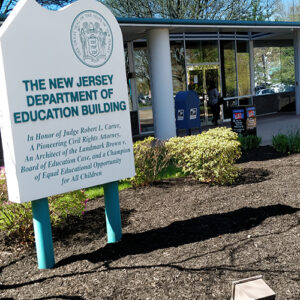
BREAKING: NJ DOE Releases Statewide Test Scores
December 3, 2025
We Need to Pay Teachers More. Here Is a Good Way to Do It
December 8, 2025‘Dishonesty Hiding in Plain Sight’: Testimony on NJ’s High School Diploma Test
Ed. note: This is testimony given by Peter Shulman at today’s Assembly Education Committee regarding Assembly Bill 4121, which would eliminate the high school graduation proficiency test (NJGPA). Shulman is recommending the committee not take action on this bill without reflecting on what a high school diploma truly means in New Jersey. His testimony is timely, given that yesterday the NJ Department of Education released state assessment scores, which showed, according to NJ Spotlight, “most of the overall performance numbers remain below pre-pandemic levels and continue to show gaping achievement gaps.”
Thank you to our Assembly Education Committee for introducing this important topic. As a former NJ Deputy Commissioner of Education and a parent of two NJ public school students, ensuring that our public school students graduate (as noted in statute) “prepared…for success in post-secondary degree programs, careers, and civic life in the 21st century” is of deep importance to me. As you consider Assembly Bill 4121, I would urge you to first interrogate what a New Jersey high school diploma really represents.
While it is unacceptable that tens of thousands of New Jersey public school students graduate each year unprepared for college, the fact that these same students were told they are ready for college is dishonest and unfair to them:
- All 11th graders take the NJGPA – which is a reflection of 10th grade reading, algebra and geometry. In 2025, over 40% of them could not pass the math section of the NJGPA. This alarming level of performance came after the State Board of Education lowered the cut score in 2023. And this metric is not an outlier as similarly low levels of proficiency can be found in NJSLS scores starting in 3rd grade and reflected in statewide SAT and ACT scores. Yet over 90% of all NJ high school seniors receive a diploma, which signals to each individual graduate that they are prepared to succeed in their post-secondary degree program. But as the NJSLA and NJGPA results warned us, almost half of all 1st year college students aren’t prepared and require remedial coursework, leading to millions in debt and more than a 50% reduction in their chances of degree completion.
- For the students who can’t pass the NJGPA, they take a proxy assessment to qualify for a diploma. These assessments include the PSAT, ACT, SAT, and Accuplacer. However the required passing scores on these proxy assessments are significantly below what the College Board (SAT) and ACT cite for a student to be college ready. For example, the College Board states that an SAT score of 480 and 530 in reading and math, respectively, represent college and career readiness. But NJ only requires scores of 450 in reading and 440 in math – which are considered by College Board as “Not Yet Approaching” (their lowest tier of readiness). This is dishonestly hiding in plain sight.
- If a student doesn’t pass the NJGPA or meet the low thresholds of the proxy assessments, they can opt for the 3rd pathway which is the portfolio appeal. Over 16% of 2024 graduates used this pathway to satisfy their math graduation requirement. While well intended, portfolio submissions take up tremendous time and they have never been correlated to post-secondary success – but almost every student’s portfolio results in a diploma.
While high school graduation is an exciting milestone, we do a life-altering disservice to tens of thousands of students and their families when we issue a diploma that we KNOW does not represent readiness for post-secondary success.
I would urge our elected officials to think about addressing the meaning of a New Jersey high school diploma before determining the future of Assembly Bill 4121.
Thank you,
Peter Shulman
Co-founder Wake Up Call NJ
Former Deputy Commissioner NJDOE