


Unanswered Questions Persist in NJ’s Proposed Testing And Reporting Changes
November 17, 2025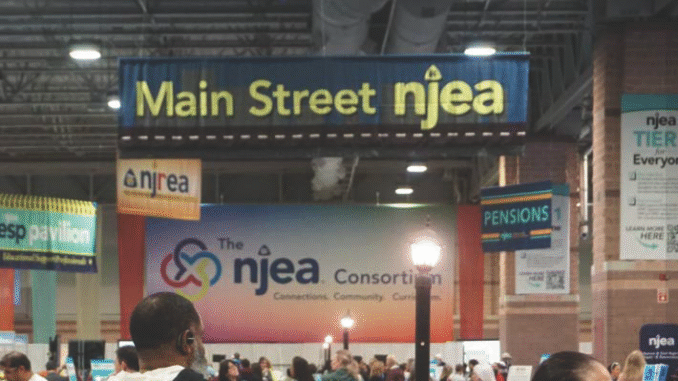
Professional Decay: My Day at NJEA’s Teachers Convention
November 24, 2025Spotlight on Montclair’s Mismanagement. It’s Not (Just) About Money.
“We love our schools, and we repeat that mantra to ourselves even in the face of mounting evidence that we have let them languish.”
That’s Andrew Rice, a New York Magazine journalist who also happens to be a parent in one of New Jersey’s wealthy high-performing districts, Montclair Public Schools. His new article “The Big Fail” (paywalled) examines the national decline in student proficiency since the 2010s which, he argues, has nothing to do with Trump or Biden or Covid and everything to do with “complacency about education” and “softening expectations,” both for families who can buy their way into districts like his and those who can’t. Short version: we were making sturdy progress in the 2010s, especially with closing achievement gaps, until Congress passed a flaccid accountability law in 2015 diminishing the use of objective data in evaluating school quality. The result is student proficiency levels started to tank. Rice calls those last gasps of federal accountability “the death throes of a period of centrist consensus about education policy.” Here’s former Education Commissioner Chris Cerf, whom Rice interviews: “The old reform hawks, like me, blame this on a radical abandonment of a playbook that was showing real progress.”
In chronicling this reversal of achievement, Rice elucidates how the “politics of education has likewise divided into polarized realities” and how for the left ”even using the word achievement—has come to sound right-coded.” Meanwhile the right screams fire in the theater for any program with a sniff of DEI. That’s how we end up ignoring important data, one side applauding Trump’s decimation of the U.S. Department of Education’s data division and dismissing test scores that don’t comport with an affection for voucher programs while the other side plants anti-hate lawn sides, chants equity slogans, and ignores dismal learning levels. (Rice calls this the “Declining Standards Hypothesis.” It’s also a manifestation of the Horseshoe Theory, which argues the far left and far right are politically closer to each other than they are to the center.) Thomas Kane of Harvard tells him, “there has just been a tremendous amount of obfuscation” about losses in student achievement.
In some ways, New Jersey functions an emblem for our national academic depression. Gov. Phil Murphy’s first Education Commissioner Lamont Repollet takes his Asbury Park scheme statewide to inflate student achievement statewide and claim “equity” bona fides. (Related: Jamaal Bowman, campaigning to be Mayor-Elect Mamdani’s schools chancellor, posts on social media, “public school high-stakes standardized testing is a form of modern-day slavery.”) The State Board of Education lowers “cut scores” on state assessments, greasing the skids for districts to claim their students are just fine. The state Education Department sits on student proficiency numbers nine months after kids took tests, allows a district like Newark to claim it is “high-performing,” and frustrates policy makers eager to analyze districts that are actually making progress.
Rice isn’t writing about New Jersey as a whole; his focus is national trends and Montclair. Yet his thesis fits for the state where wealthy suburban parents have been “comfortable in their assumptions about schools,” never mind the fact that there are more branches of Kumon than CVS’s. Data becomes dismissible because Covid and screens and not enough social-emotional support and there’s never enough funding even though, for instance, Montclair currently spends $27,600 per pupil, according to Census Bureau data. (Rice quotes Julia Borst, head of Save Our Schools-NJ, who chants, “This data has been telling you the exact same thing since the 1980s. ‘It’s poverty, stupid.’”)
Except we did have lots of extra money — $190 billion thanks to Covid boosts — and little changed, even in Montclair, a town Rice describes as “an island of suburban urbanity and a place that must be home to more writers, journalists, cablenews producers, podcasters, late-night talk-show hosts (okay, just one of those: Stephen Colbert), and more-a-comment-than-a-question callers to The Brian Lehrer Show per capita than any municipality in the country. It’s a place brainy people move to—lately, paying a million dollars or more for a house—because they desire to be around like-minded folks with liberal values who care about the quality of our public education, which we finance via exorbitant property taxes.”
But now Montclair is confronting a $19 million budget deficit and, courtesy of new transparency from a non-profit, the community knows “less than half of all Algebra 1 students scored at or above grade level and just 14 percent of Black students did.” Maybe we’ll start acknowledging that we’ve been getting something wrong, that our problems are bigger than not enough money and too much testing, a theory convenient for adults and politicians but illusory for kids and their parents. Rice cites education politics expert Vladimir Kogan who tells him, “adult political considerations and adult political objectives ultimately drive policy. It’s not that people don’t care about kids, but those considerations are of secondary importance.”
We know this. Across the country a third of high school seniors lack basic reading skills and nearly half can’t do rudimentary math. There has been (at least in my feed) much chatter about revelations at the selective University of California San Diego where freshmen can’t do middle school math but got As and Bs on high school report cards while a faculty report points to a “steep decline in the academic preparation” of entering freshmen.” There are a few bright spots which happen, again inconveniently, to be in red states like Mississippi and Louisiana, which leads Gov. Elect-Mikie Sherrill, herself a Montclair resident, to claim those places have “some of the worst schools in the entire nation.” (They don’t.)
The facts on the ground don’t fit with progressive impulses. But the longer we indulge them, the worse it is for kids. Here is Rice:
“Maybe this is one reason people in Montclair were so comfortable in their assumptions about their schools. They couldn’t be so bad if we spent so much on them, could they? It wasn’t until the new superintendent arrived and exposed the district’s mismanagement that we began to wonder if the money had been going to the wrong places. [New superintendent Ruth] Turner told the school board she had never worked in a district that invested less in curriculum and instruction. Even as Montclair’s budget has spiraled out of control, the amount it devoted per pupil to core educational expenses actually declined over the three most recent years.”
Turner gets that, telling Rice, “I don’t know how much of a priority teaching and learning has honestly been.” He interviews Montclair parent Obie Miranda Woodley who says “It’s like a buzzword: equity. ‘I care about equity as my priority,’’’ But the district has one or two meetings a year where they say, ‘This is the data.’ And there is no explanation about how they are going to improve it.”
How are we going to improve it, to see our way clear again to a centrist consensus on education policy? Not with virtue-signaling, whether that’s through lawn signs or chopping up the U.S. Ed Department, that’s for sure. Only by coming clean with parents about student proficiency levels, facing inconvenient data, raising standards, and prioritizing learning over politics.
https://x.com/riceid/status/1990787823960772909



3 Comments
For 52 years the NJ Supreme Court could not have been clearer—the State is ultimately responsible for every NJ student receiving a “thorough and efficient” education. Especially in recent years, the State has decided to ignore that constitutional command. The result? Wealthy districts such as Montclair are largely left to do their own thing, for better or worse. And poorer and more burdened districts are increasingly left to their own, often inadequate, resources to try to make do. If we want to improve our state’s educational results, we need to care enough to get the state’s education authorities to do what they’re supposed to. That’s not the whole answer, but it’s an essential start.
The “No Child Left Behind” initiative was the right idea. Finally there was a national standard and national results that showed the truth behind student achievement. At that point, everyone involved in education should have come together for solutions instead of asking for waivers, more money, and making excuses.
This is the funniest thing I’ve read all day! Who knew paying $27K per pupil in Montclair could lead to a budget deficit and Algebra 1 students scoring below grade level? It’s all so clear now – the problem isn’t poverty or money, it’s that equity has become just another buzzword, like teaching and learning which apparently isnt a priority. Maybe we should lower the cut scores nationwide and declare everyone high-performing? That’ll fix it! After all, data is just for adults, right? Kids and parents are just going to have to trust the experts – even when their math skills are… let’s say, rusty. And don’t get me started on those red states with actually improving schools; they must be doing something wrong. /sarcasm Please!