

CERF: New Jersey Is Moving to End HS Graduation Exam. It Must Not Let Standards Slip.
February 9, 2026
EXPLAINER: The Panels You’ve Never Heard Of — And How They Decide School Funding
February 17, 2026Three Ways Sherrill Can Show She’s Serious About Improving NJ Schools
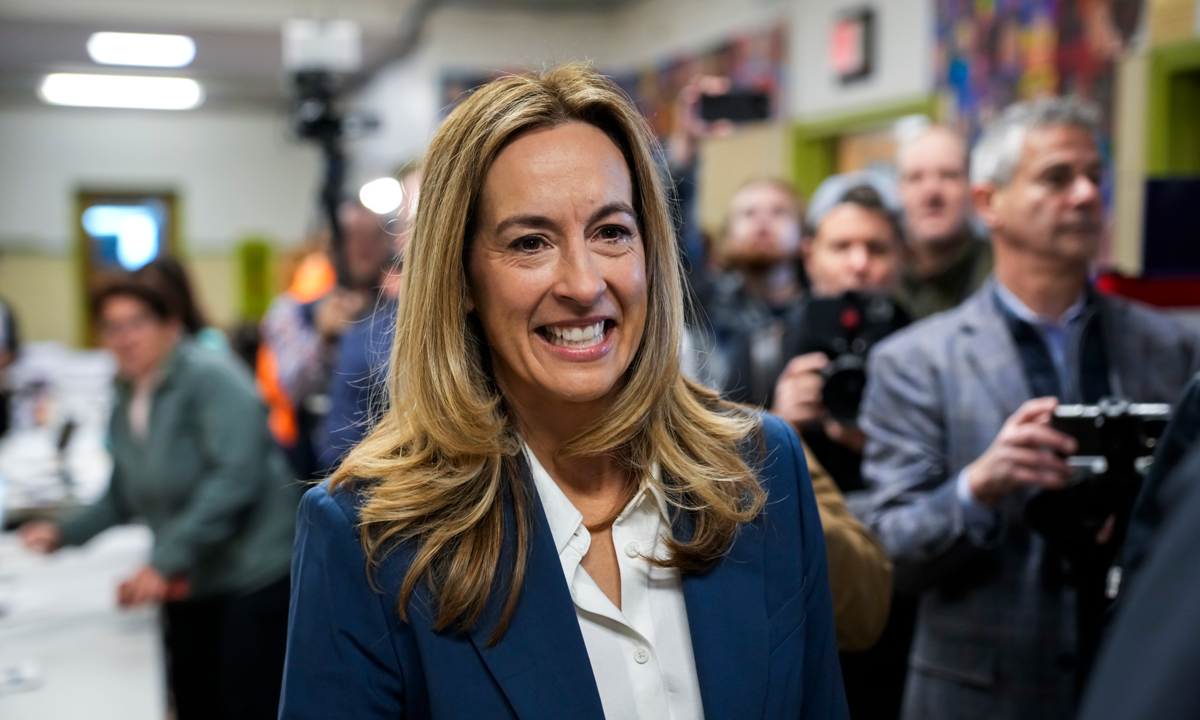
Almost every New Jersey governor pitches herself as an education leader, with lots of promises about improving outcomes and equity for our kids. Chris Christie (however much you want to hate him) was an effective advocate for public school choice, which has reaped dividends for children, especially those trapped in low-performing districts. Phil Murphy, while genuflecting to “party orthodoxy,” upped the state’s funding contributions to schools and teacher pensions and signed some important literacy bills. New Gov. Mikie Sherrill has made promises too, specifically around improving equity, student performance, and integration.
That all sounds fine. But, realistically, what levers could Sherrill pull, particularly in a state that has the strongest executive branch in the country? How could she shape the current landscape where (according to most recent test scores) 45% of third graders can’t read at grade level and less than 60% of high school seniors can pass a 10th grade math test? How can we change a system that trumpets its “number one school system in the country” while three out of four third-graders in our largest district can’t read?
Chad Aldeman has some suggestions. In an open letter to the nation’s governors, he lists seven “simple, low-cost ways governors could help get education back on track.” They’re all worthwhile but I want to look at three of them: innovative ways to help students through the new federal tax credit program; being honest with parents about student progress; and getting serious about accountability. These pathways could serve as foundational strategies for our new Education Commissioner Lily Laux (kudos to Sherrill for thinking outside the box and choosing an education leader from Texas who has shepherded in important reforms) and for Sherrill’s budding administration.
1. Signal interest in opting in to the federal tax credit program
(See “Can Sherrill Get Past ‘Trump Sucks’ and Do Right By Kids.”)
Gov. Sherrill, like all U.S. governors, is going to have to make a decision about whether to accept federal money from the new tax credit program that allows individuals to get a $1,700 federal tax credit for contributions to non-profits providing scholarships for tutoring, afterschool programs, private school tuition, and programs for kids with disabilities. NJEA and related lobbying groups like Education Law Center hate this program, declaring it would take money from traditional school coffers. But it doesn’t: it’s extra money from voluntary federal tax credits which will be shared among states that opt in. Governors who opt out are leaving money on the table.
Many Republican governors have already signed up. It’s a harder call for Democratic leaders because, well, Trump.
The easy way out would be for Sherrill to dismiss this opportunity (and the attendant funding). But what if she chose instead (depending on the regs) to mold a program that aligns with NJ values and provides resources for students? In a recent interview Colorado Governor Jared Polis argues the program is similar to Medicare expansion through ObamaCare — Republican governors first scorned the added revenue but got on board once they realized they were just turning away money. For Colorado, he says, “it’ll help bring more educational services to more kids, and the form of that will be decided by what donors choose and what Coloradans want.”
Can Sherrill hold her nose and take the money? Or at least think strategically about it, status quo naysayers be damned? This approach would be good for kids.
2. Direct the state department of education to share test results with parents and educators within 30 days of administration.
Currently NJ parents don’t get their children’s state standardized test scores until months after they take them. Meanwhile, 80% of NJ K-12 students get A’s and B’s on report cards, perpetuating the pretense that our kids are alright. How late are we in reporting test scores? Currently the NJ DOE School Performance Reports still show proficiency rates from school year 2023-2024, almost two years after students took the tests in March 2024.
And in the current system parents don’t see their kids’ scores until October, over six months after students take the tests in March and way too late to implement effective interventions.
Our federal education law isn’t any help, simply saying states should release the scores “as soon as is practicable after the assessment is given.” Surely it is “practicable” to turn the tests around in four weeks so parents and local districts can help kids catch up during the rest of the school year and over the summer.
The NJ DOE is launching a new test this year, solely computer-based. While the Department has been mum about whether this new model will yield faster turnaround times for parents, teachers, school districts, and state policy makers, the Commissioner can make it happen. The result would be a much-needed reality check for parents who rely on vastly inflated report card grades to gauge their children’s academic progress.
Note: in Texas, Laux’s most recent post, parents see their children’s standardized test scores in early June. New Jersey, be like Texas!
3. Ask for an independent review of the state’s accountability plan
Speaking of D.C., under our federal education law (the Every Student Succeeds Act, or ESSA), every state has to have an accountability plan that is supposed to improve education for disenfranchised students and be accountable to the public. Do you know what NJ’s ESSA goal is for 2024?
Academic Achievement: 100% of all students will meet or exceed grade-level expectations on the statewide English language arts (ELA) and mathematics assessment.
Great goal! But it is meaningless because the federal government has abdicated its oversight role and delegated it to states. In NJ, there is no state oversight: no consequences, no interventions (except for the bottom 5% of schools), no support for teachers and families.
To wit, the 2017 ESSA plan called for 80% of students to meet or exceed grade-level expectations. We never got there, of course, and simply jacked up the goal for the next cycle.
So let’s get real: 100% proficiency rates (whiff of the much-maligned No Child Left Behind here) is slapstick farce. No one takes it seriously. Yet there is nothing to stop NJ from setting realistic goals with clearly articulated strategies. We give it the old college try through the state accountability evaluation called QSAAC (here is an Explainer) but there is little follow-through. In Newark, for instance, superintendent’s protestations aside, students still get cheated by a dysfunctional bureaucracy: According to Chalkbeat, “nearly 70% of students in grades 3-9 are falling short of meeting literacy benchmarks, around 82% aren’t meeting math standards, and 93% of fifth graders are below grade-level in science.”
And…nothing happens.
What if something happened?
What if NJ authorized an assessment of their accountability plan, just like Virginia did (to great fanfare)? What if we borrowed interventions from states that have raised achievement among much more impoverished demographics through an empowered state education agency, whether that is requiring districts to choose among a few high-quality instructional curricula, deploying master teachers to coach those who need more support, fully-funding high-dosage tutoring programs for those in need? What if NJ was agnostic towards alternative programming buffeted by strong guard rails? What if we didn’t shy away from hard truths about student struggles?
Commissioner Laux and Governor Sherrill are going to be faced with challenging choices. I hope their North Star is what’s best for children.